Original Article: https://jpderouin.medium.com/could-pokémon-trading-card-style-stamp-packs-save-the-usps-a92a0b61ceb1
The USPS is standing at the edge of a financial cliff. If changes aren’t made, the post office will run out of funds to pay its workers and deliver the mail by February 2027. Congress is currently discussing proposals on how USPS could modify its services to continue to operate. Rather than raise stamp prices or close offices, it’s time for USPS to leverage their 250-year monopoly on postage stamp issuance and cash in on the Pokémon trading card trend. The USPS needs to start selling collectible stamp blind packs!
USPS’s Struggles
Since 2007, the USPS has been operating in a steep financial deficit. Declining mail volume from the rise of digital communication and shipping competitors such as UPS and FedEx has caused the organization to fall on hard financial times. The USPS’s financial situation has become worse year after year with USPS ending its 2025 fiscal year with a net loss of $9.5 billion.
The USPS is a self-funded government agency. It is NOT funded by tax dollars. To cover its losses, the USPS is able to borrow money from the US treasury. However, the limits as to how much USPS can borrow are stipulated by congressional legislation and these limits have not been raised since 1992. In a recent House Oversight Subcommittee on Government Operations hearing, Postmaster General David Steiner testified before Congress that unless the USPS debt ceiling is raised, the USPS will not be able to fund itself by early 2027, potentially causing significant disruption in the mail service. In the same hearing Steiner not only requested the debt ceiling be raised but gave some proposed modifications to USPS’s services to cut costs. These cost-cutting measures include reducing delivery days, increasing stamp prices to nearly a dollar, closing post offices, and modifying workers’ compensation. Most significantly, the USPS is asking Congress to consider the scope of the Universal Service Mandate that requires USPS to deliver to every address in the country in order to cut costs. In response, Subcommittee Chairman Pete Sessions and other members of Congress of both parties have pushed back on these proposals, as have postal worker unions. These proposals only cut costs rather than find new revenue sources or improve existing sources. The USPS can significantly increase revenue by looking to one of its oldest services, issuing postage stamps.
170+ Years of Collectible Stamps
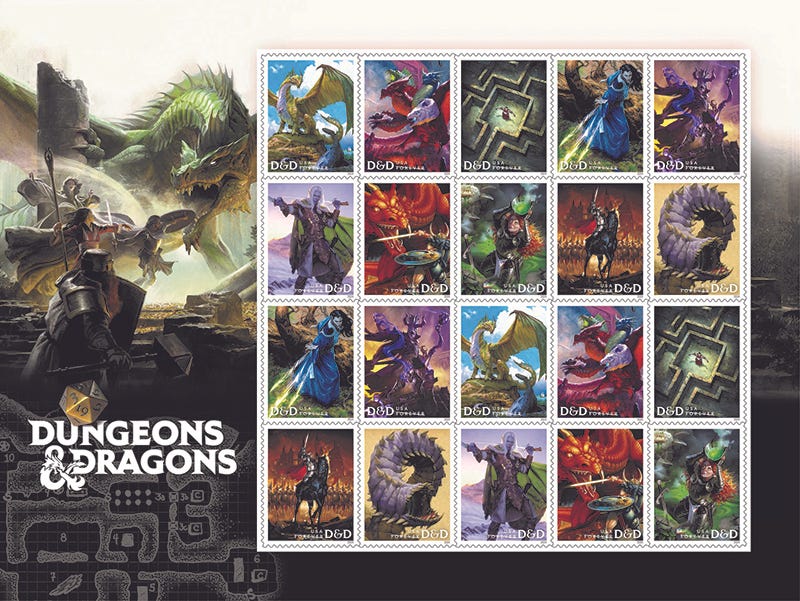
Since 1847, postage stamps have been the primary method in which postage was paid for mailing letters. Postage stamps do not expire and purchased forever stamps are guaranteed to mail a 1 oz letter even if the price of postage goes up. Postage stamps are not just a simple utility; many of them have unique designs, artwork, and messages, each showcasing a small part of American culture or history. They are essentially little pieces of government endorsed artwork. Because of this, stamp collecting has been a hobby for over a century and a half. Stamp designs have historically consisted of notable people like presidents or American heroes while other stamps feature national parks, holidays, and other commemorative statewide or countrywide events. In recent times, USPS has even partnered with popular cultural icons for stamps including Dungeons and Dragons and SpongeBob Squarepants. Despite these partnerships appealing to the younger demographic, many of those in the younger generations have never sent a physical letter and thus have never bought stamps or interacted with stamp collecting. At the same time, the younger generations clearly aren’t averse to collecting. The Pokémon trading card trend has captivated the attention and wallets of millennials and Generation Z alike.
Gotta Buy Em All: The Pokémon Card Business Model
Trading cards have been around since the late 1800s. What started as collectible cards depicting flags, actors, and military leaders within cigarette packs has grown to include baseball players, basketball players, fictional characters and more. These cards were fun to collect but had no utility outside being collectible pieces of cardboard with art. That all changed in the 1990s with the introduction of the trading card games Magic: The Gathering and the Pokémon Trading Card Game. In Magic: The Gathering and the Pokémon TCG, no longer were trading cards just pieces of art. Instead, each card had unique mechanics that could be used within a full-fledged tabletop game that you could play with your friends. Players were now encouraged to buy cards not just for collectibility’s sake but to also try to build a unique deck and strategy to win a game. While both Magic and the Pokémon TCG are still going strong to this day, the Pokémon TCG managed to break outside the “gamer” niche and into mainstream culture, owning a 12% market share of the trading card industry, an industry now worth over 8 billion dollars.
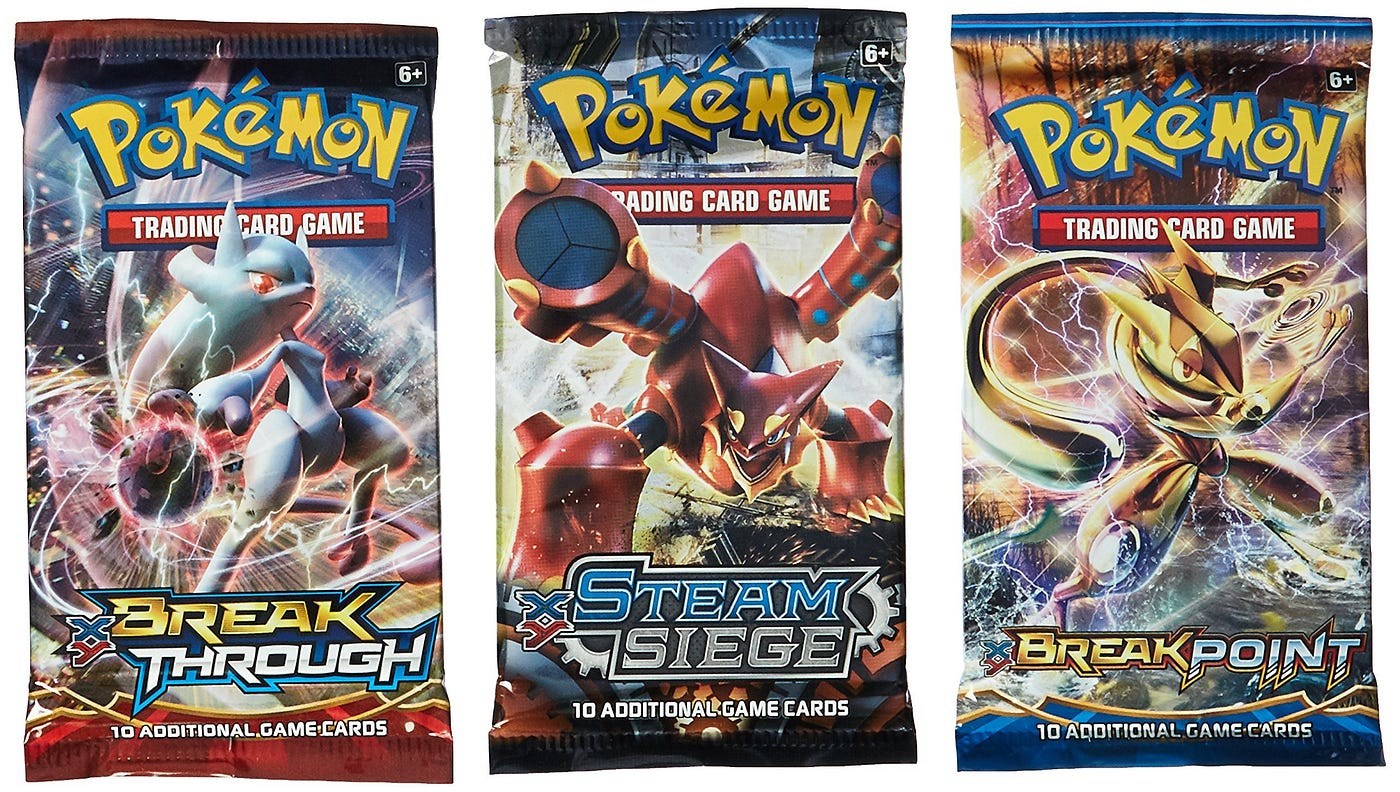
The method the Pokémon Trading Card game uses for selling its packs is the blind pack model. Customers don’t know what cards they got until they have purchased and unwrapped the pack. Pokémon Booster card packs are by far the most popular way people buy Pokémon cards. Each Pokémon Booster pack contains 10 Pokémon cards of varying rarity. A pack typically consists of a few common cards, a couple uncommon ones, and at least one rare card with the possibility of an additional rare card or a “secret rare” card containing alternative art of an existing card. The thrill of not knowing what’s inside each pack is what keeps Pokémon TCG players and collectors coming back for more.
USPS Blind Packs
USPS could generate massive revenue if it adopts the blind pack model for stamps that Pokémon made so popular. USPS could release different themed “Forever stamp series” for these blind packs such as “Space Exploration,” “American Inventions,” or “US Highways”. Stamps within each series would be assigned different rarity tiers each with unique designs. Common stamps would be typical representations for a theme while the uncommon tier and beyond would consist of more unique or “deep cuts” from a particular theme. Rare and secret rare stamps could also consist of holographic (shiny) versions of common stamps or alternative artwork for a previous stamp design. Each blind pack would consist of 10 stamps, 5 common, 3 uncommon, 1 rare (guaranteed), 1 variable slot which has the possibility of being a secret rare stamp.
Example: Space Exploration Stamp Series
Common: American Flag on the Moon, Space Shuttle Launch, International Space Station, Hubble Space Telescope, Astronaut Spacewalk.
Uncommon: Neil Armstrong Portrait, Mars Rover, Saturn V Rocket, Sally Ride, Voyager Spacecraft.
Rare: Holographic Earth from Space, Holographic Apollo 13, Golden Record, James Webb Deep Field Image, Cartoon-drawn Neil Armstrong Portrait.
Secret Rare: Anime-style Voyager Spacecraft, Holographic Moon Landing, Area 51, Roswell Incident, UFO, Global Positioning System (GPS).
As for pricing, each blind pack would cost the same amount as a sheet of 10 Forever stamps. Unlike every other trading card product, where opening a blind pack to find only common cards leaves you with worthless cardboard, USPS stamps have inherent utility built into them. Every stamp is still valid Forever postage regardless of rarity. A common and a secret rare stamp will both mail a letter, making the value proposition far stronger than traditional trading cards.
The USPS app could also add a Pokédex-like “stamp database” feature where collectors could see a database consisting of every stamp series USPS has ever released, each stamp’s rarity, and a piece of trivia about each stamp. Additionally, users could mark a stamp as obtained in the app to track their progress towards completing a set.
Financially, the USPS would benefit tremendously through breakage. With strong collectible incentives, people will buy far more stamps than they would ever use to mail. Every unused stamp would be free money for USPS to fund its operations. Many stamps would end up in binders rather than on a letter.
Perhaps a stamp collecting trend could even bring back physical letter sending. With the rise of AI making it frictionless to compose and send digital messages, a well-written physical letter carries more weight than it has in decades. Picking out a specific stamp for a specific person, writing something by hand, and mailing it signals effort in a way that a text or email never will.
The clock is ticking on USPS being able to fund itself before it runs out of money. Instead of cutting delivery days or closing post offices, the USPS needs to innovate and utilize its unique position as the only authority that can issue postage stamps. It’s time to bring a century-old hobby to millennials and Generation Z using the proven mechanics of the Pokémon Trading Card Game.
How Can We Get This Done?
Since USPS is a government organization, Congress has significant influence on how they do business. Reaching out to both USPS and your congressional representatives is critical for getting those with actual power within the organization to have their eyes on this proposal. If you contact your representatives, feel free to link this article.
Emailing Your House Congressional Representative
Click here to find and email your House representatives. NOTE: After finding who your representative is, you will have to find the email button that looks like this:

Contacting Your Senators
Click here to follow instructions for contacting your Senators.
Writing to the USPS Citizens’ Stamp Advisory Committee
The Citizens’ Stamp Advisory Committee is the USPS body overseeing the development of USPS stamps. They accept only physically written letters for suggestions. Their mailing address is:
Stamp Development
Attn: Citizens’ Stamp Advisory Committee
475 L’Enfant Plaza SW, Room 3300
Washington, DC 20260–3501
Jake Derouin is a semi-professional triathlete with a BS in Creative Technology and Design from CU Boulder. Jake ran Division I Cross Country and Track at CU Boulder 2020–2024 and has a background in iOS mobile app development and iOS security research.